Now piloting with families, teams and hardware makersThe health platform your
The health platform your
people will actually use.
The most complete picture of health, simple enough that everyone shows up.
Turn the data they already have into one clear picture.
 WHOOP
WHOOP Fitbit
 Samsung Health
 Health Connect
 Google Fit
 Wahoo
WahooFind your solution.
Families
The people you love, in view.
Piloting now →Performance Teams
Everyone ready, together.
Piloting now →Hardware Makers
Your device, VALT inside.
Piloting now →Coaching & Wellness
Guide every person better.
Coming soonEmployers
A benefit people actually use.
Coming soonClinics & Care
Stay close between visits.
Coming soonResearch
Longitudinal data, your way.
Coming soonSomething else
Anyone can talk to us today.
Talk to us →Piloting today with families, performance teams and hardware makers. Something else? Anyone can talk to us →
No new hardware. No lock in.
Works with the wearables they already own
On iOS, Android and the web
Members share only what they choose
Every score backed by published science
A platform for you, an app for them.
Your dashboard · fully customizable Your groupTEST
Your groupTESTMEMBERS248
VALT AGE31.4
READINESS82
SLEEP7.4h
BIOMARKERS14
IN RANGE92%
RECORDS1.2k
SYNCED241
Team VALT Age
31.4yrs3.6 yrs younger
Today
Readiness
82
Sleep
7.4h
Recovery
74
Strain
12.4
Pace of aging
0.9×slower
0.5×1.5×
Contributing factors
Cardiovascular−0.9 yrs
Metabolic−0.6 yrs
Fitness−1.4 yrs
Sleep−1.1 yrs
Biomarkers
1121
ApoB78mg/dL
hs-CRP0.7mg/L
HbA1c5.2%
Records
1.2krecords · 320 folders
Labs, imaging, historyHealth dimensions
Bio age
88/100
Cardiovascular
82/100
Metabolic
79/100
Inflammation
84/100
Hormonal
76/100
Fitness
81/100
Body comp
77/100
Longevity
85/100
Their app · Health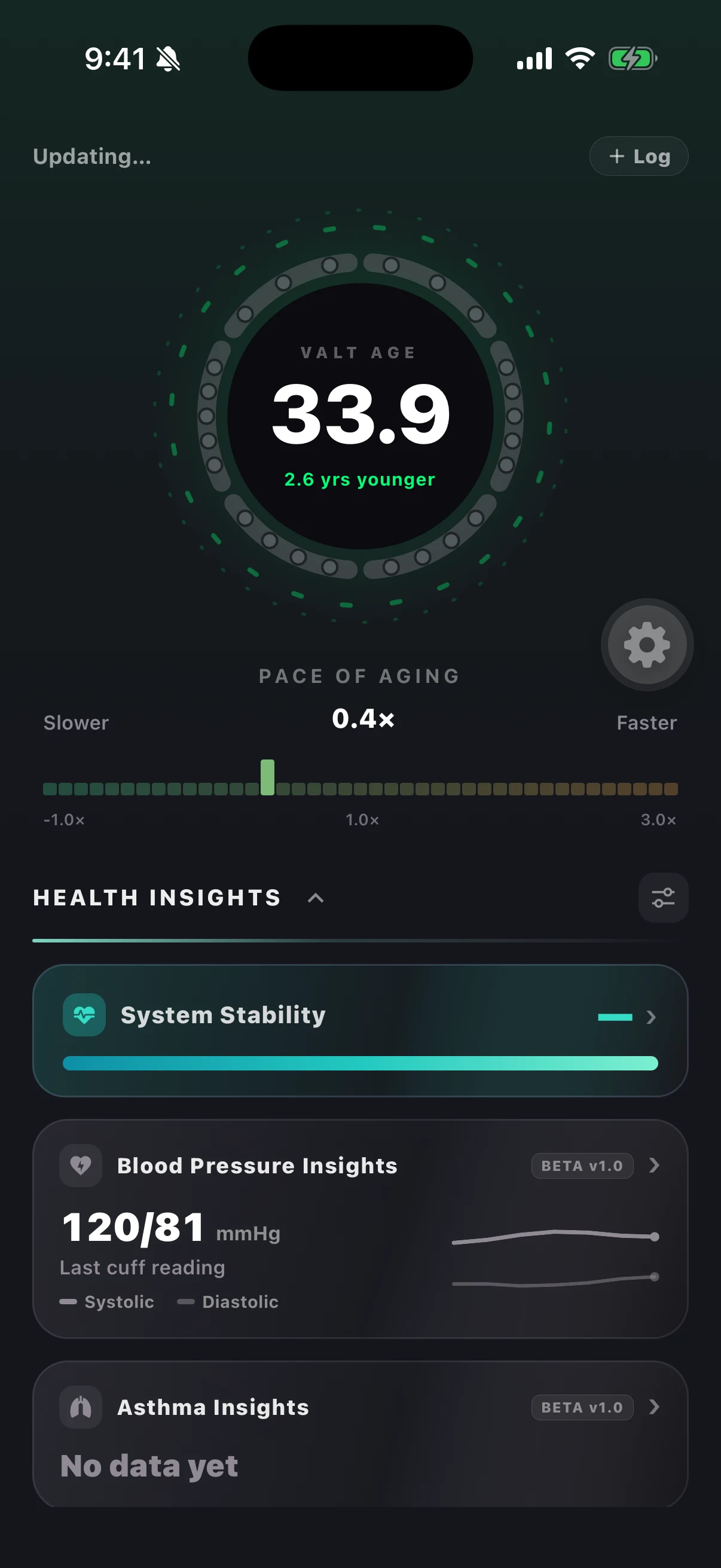
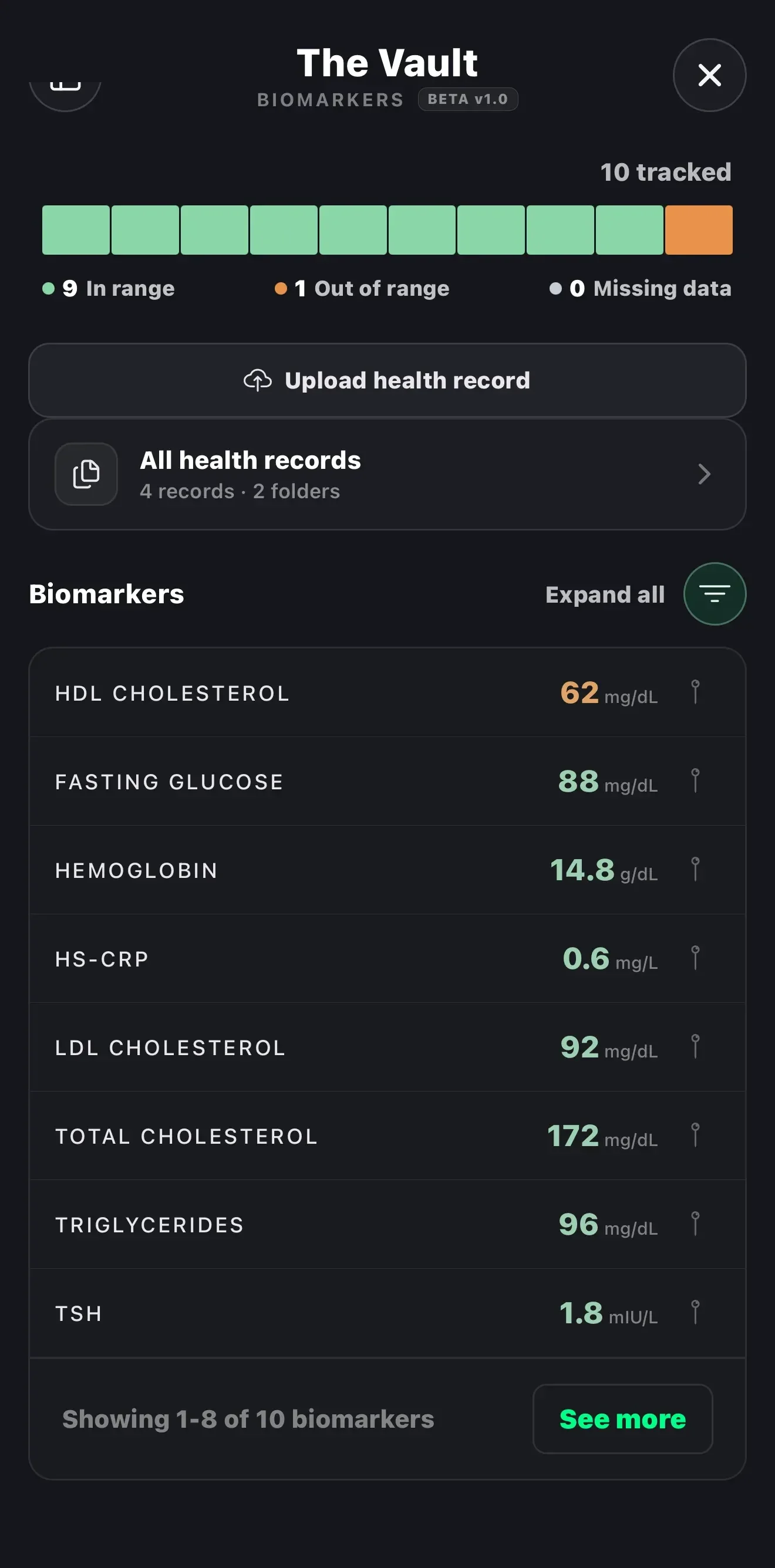
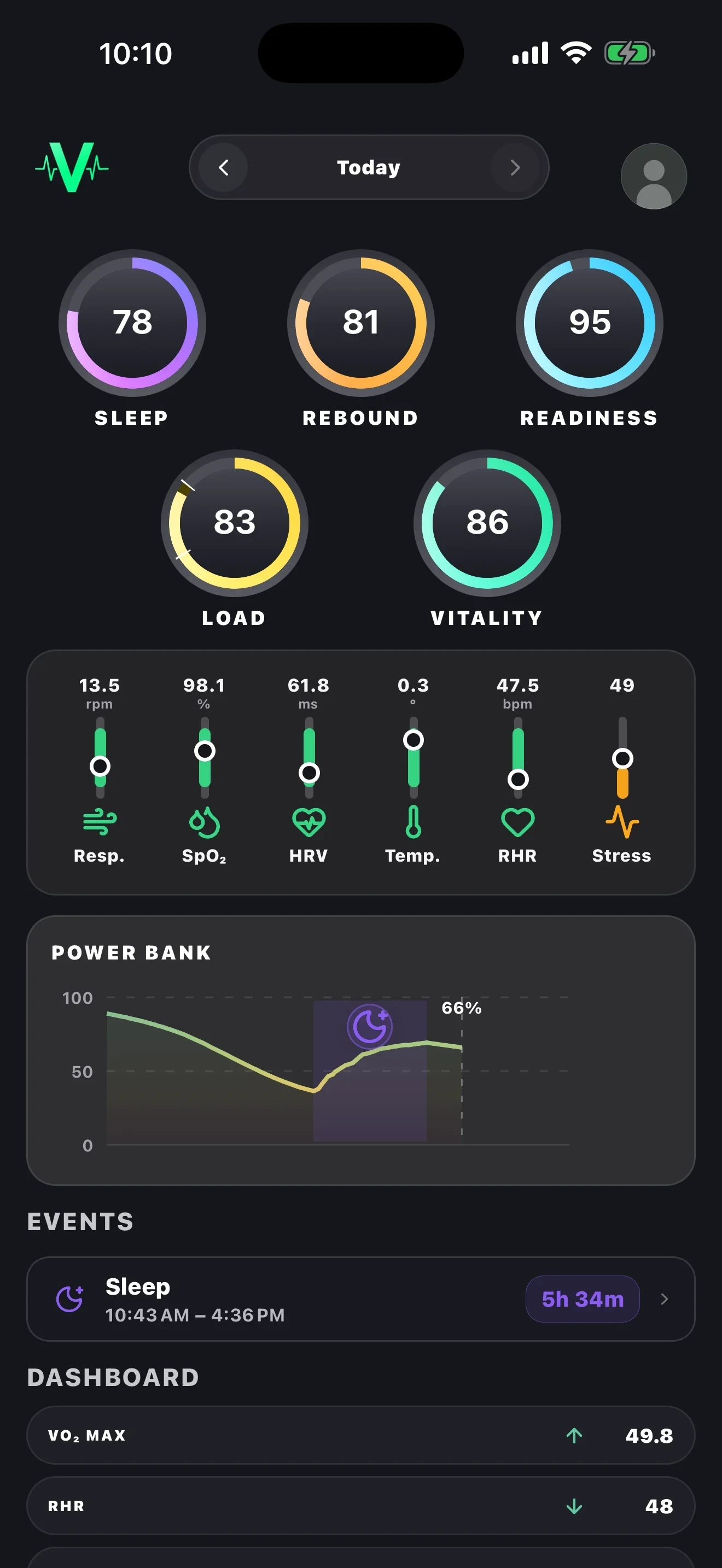
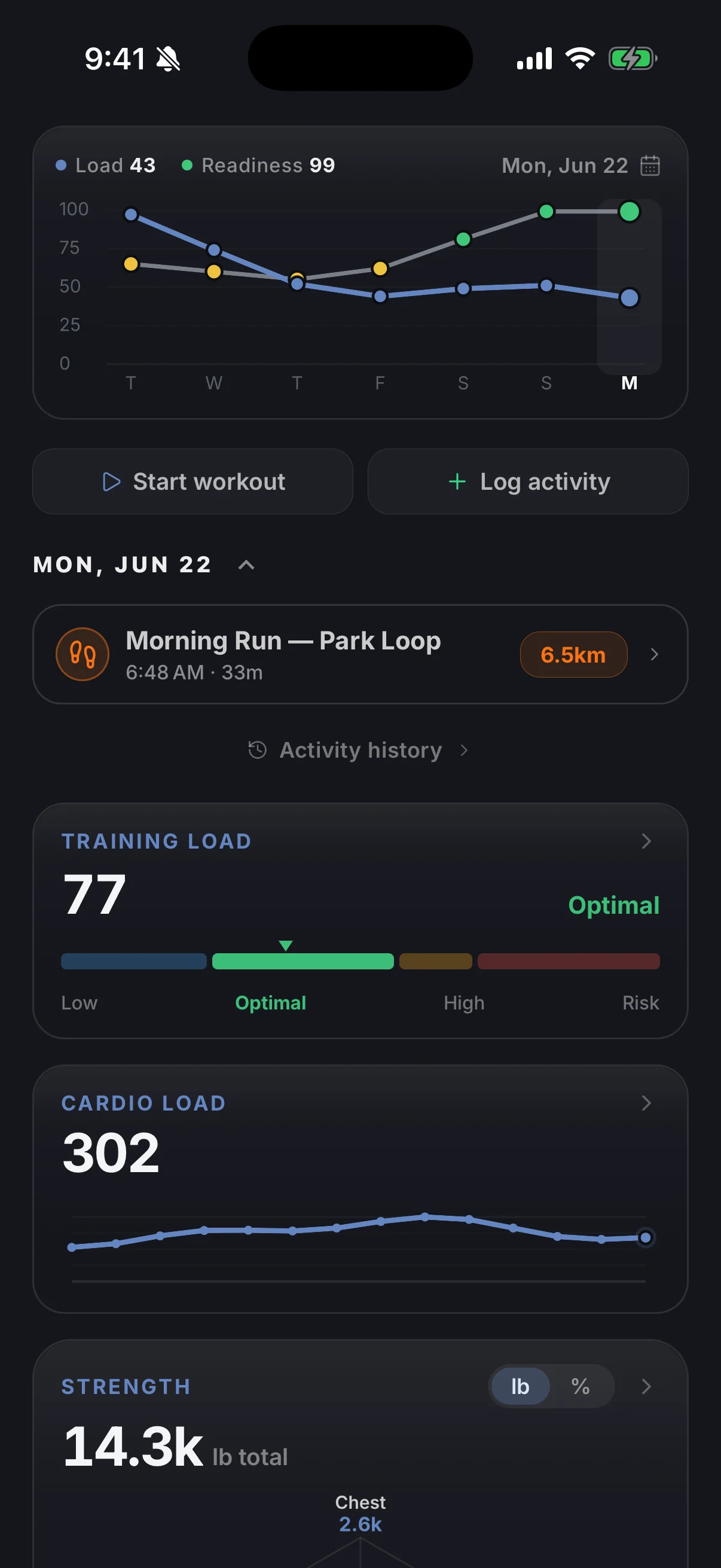
Private by default. Members opt in, data is encrypted, and you see only aggregate views. VALT is not a medical device.
Health, finally connected.
SleepHow well they rest.
HeartBeats to long term health.
RecoveryPush, or ease off.
ActivityMovement and training load.
MetabolicHow the body fuels.
NutritionWhat goes in.
StressLoad and recovery.
MindMood, day to day.
LongevityHow they age.
Become a pilot partner.
We’re shaping VALT for Groups hand in hand with a small circle of partners.